

You are enjoying a sunset dinner in Dubai Marina when a drop of dressing lands on your favorite linen shirt. In the intense Dubai heat, that grease does not just sit there; it bonds with the fibers almost instantly. It is a common fear that you cannot remove oil stains from clothes without leaving a permanent shadow or damaging the delicate weave. Most people find it frustrating when a spot seems gone, only to reappear once the fabric dries, often looking worse than before.
We understand the pressure of maintaining a high-end wardrobe in a fast-paced environment. You can master the art of eliminating even the most stubborn grease spots while protecting your most cherished garments from long-term damage. This guide covers immediate actions to take the moment a spill happens, professional techniques for various textiles, and the specific signs that tell you it is time to call in an expert for a meticulous, safe restoration. By the end, you will have the confidence to handle any spill with precision and ease.
Key Takeaways
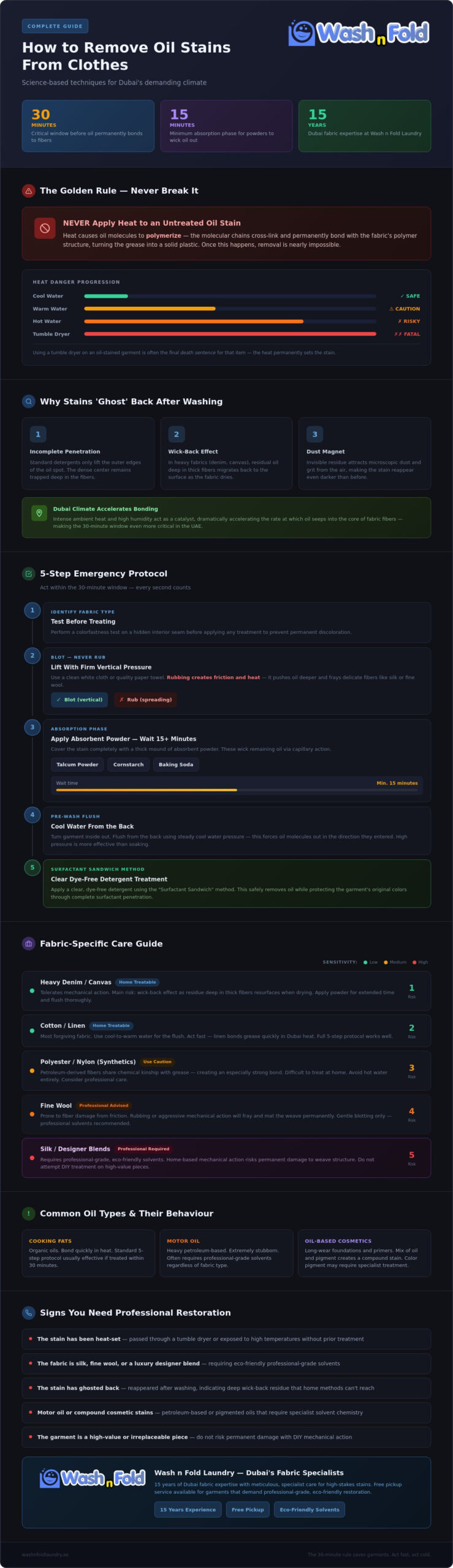
- Understand the “Golden Rule” of grease: never apply heat to an untreated spot, as it permanently bonds oil to the fabric’s molecular structure.
- Act within the critical 30-minute window using precise blotting techniques to lift residue before it penetrates the weave.
- Master the “Surfactant Sandwich” method to safely remove oil stains from clothes using clear, dye-free detergents that protect original colors.
- Identify when delicate textiles like silk or designer blends require professional-grade, eco-friendly solvents rather than home-based mechanical action.
- Leverage 15 years of Dubai fabric expertise and free pickup services for high-stakes stains that demand meticulous, specialist care.
The Science of Grease: Why Oil Stains are So Stubborn
Oil is not just a surface-level mess. It is a chemical challenge that requires a precise approach. To effectively remove oil stains from clothes, you must understand that grease is lipophilic, meaning it has a natural molecular attraction to other oil-based substances. This is particularly problematic for synthetic fabrics like polyester or nylon. Since these fibers are derived from petroleum, they share a chemical kinship with grease, creating a bond that is remarkably difficult to break. The Science of Stains reveals that these physical and chemical interactions dictate how deeply a substance penetrates the weave.
Why Oil Stains ‘Ghost’ Back After Washing
It is a common frustration. You wash a garment, it looks clean while damp, but a dark “halo” appears once it dries. This happens because standard detergents often fail to achieve complete surfactant penetration. The outer edges of the oil spot are lifted, but the dense center remains trapped. In heavy fabrics like denim or canvas, a phenomenon called “wick-back” occurs. Residual oil deep within the thick fibers migrates back to the surface as the fabric dries. This invisible residue acts like a magnet, attracting microscopic dust and grit from the air, which eventually makes the stain reappear even darker than before.
The Enemy of Restoration: High Temperatures
High temperatures are the primary reason garments are retired prematurely. Placing an oil-stained shirt in a tumble dryer is often the final death sentence for that item. While hot water is sometimes recommended for heavy cottons, it can cause certain oils to set deeper into delicate weaves rather than lifting them. Precision is everything. Polymerization of oil in fabric fibers occurs when heat causes the oil’s molecular chains to cross-link and bond permanently with the garment’s polymer structure, effectively turning the grease into a solid plastic. This chemical shift makes it nearly impossible to remove oil stains from clothes once the fibers have been fundamentally altered by heat.
Immediate First Aid: The 5-Step Emergency Protocol
Timing is the most critical variable when you attempt to remove oil stains from clothes. You have a narrow 30-minute window before the lipid molecules settle deep into the garment’s weave. This immediate intervention determines whether the piece is restored or ruined. If you wait longer, the UAE’s ambient temperature begins to bond the oil to the fiber. Start by identifying the fabric type. Before applying any treatment, always perform a colorfastness test on a hidden interior seam. This ensures your rescue attempt doesn’t result in permanent discoloration.
The most common mistake is the instinctive urge to rub the spot. Rubbing creates friction and heat. This pushes the oil deeper into the fabric and can fray the fibers of delicate materials like silk or fine wool. Instead, use a clean white cloth or a high-quality paper towel to blot the area with firm, vertical pressure. This action lifts the excess liquid without spreading the damage. Professionals often reference Wirecutter’s stain removal tips for these initial mechanical steps.
Step-by-Step: The Absorption Phase
Once you’ve blotted the excess, it’s time to create an absorption layer. Cover the stain completely with a thick mound of talcum powder, cornstarch, or baking soda. These fine powders are highly absorbent. They wick the remaining oil out of the fibers through capillary action. You must wait at least 15 minutes for this process to work. Rushing this stage often leaves a residual shadow. After the wait, gently brush the powder away using a soft-bristled brush or a dry cloth. Be careful not to press the powder back into the weave.
The Pre-Wash Flush
After the powder treatment, turn the garment inside out. Flush the stain from the back of the fabric using a steady stream of cool water. High water pressure is more effective than simple soaking. It physically forces the oil molecules out of the fibers in the direction they entered. Avoid hot water at this stage. It can set any remaining grease before the surfactant stage. If the garment is particularly valuable or the fabric is exceptionally delicate, you might prefer to skip the DIY risks and use a professional stain removal service to ensure a flawless result.
Removing Set-In Oil Stains: Advanced Home Techniques
If you discover a spot after the garment has already dried, you are likely dealing with a set-in stain. This is where many people encounter the “reappearing stain” phenomenon. You wash the item, it looks clean while wet, but a faint dark circle returns once it dries. This happens because the oil has not been fully emulsified; it has simply been spread thinner across the fibers. To effectively remove oil stains from clothes at this stage, you must use a more aggressive approach to break the molecular bond without compromising the fabric’s integrity.
The most effective professional-grade home method is the “Surfactant Sandwich.” This involves applying a concentrated cleaning agent to both the front and the back of the fabric. By attacking the lipid bond from both sides, you ensure the cleaner penetrates the core of the weave. Always use a clear, professional-strength dish soap for this process. Colored variants often contain synthetic dyes that can migrate into the fabric under the Dubai heat, creating a secondary “dye stain” that is frequently more difficult to treat than the original grease.
The Power of Heavy-Duty Surfactants
Dish soap is engineered specifically to break down animal fats and vegetable oils. Its molecules have a hydrophilic head that attaches to water and a lipophilic tail that clings to oil. This allows the oil to be lifted away during the rinse cycle. Avoid using moisturizing hand soaps or body washes. These products often contain oils or lotions designed to soften skin, which will only add more residue to your garment. For stubborn spots, apply the clear soap and let it sit for at least 30 minutes. This “soak and sit” method gives the surfactants time to work through the dense layers of set-in grease.
Natural Solvents: Vinegar and Lemon
For oily food stains, such as salad dressing or pasta sauce, acidic balancers can be highly effective. Distilled white vinegar helps break down the complex proteins often mixed with food oils. However, use caution with lemon juice. While it is a powerful natural degreaser, it acts as a mild bleach. In the intense UAE sun, lemon residue can cause permanent “sun-bleaching” on dark or sensitive designer dyes. If you use these agents, always neutralize the area by rinsing thoroughly with cool water. If the scent of vinegar persists, a quick second wash with a high-quality detergent will remove any lingering odor. Use soft, circular motions with a clean toothbrush to work the solution in; aggressive scrubbing will only damage the fabric’s finish.
Fabric-Specific Care: From Silk to Heavy Denim
Different fabrics react to grease in unique ways. A drop of oil on a cotton t-shirt behaves differently than on a silk blouse. Natural fibers like linen and cotton, staples in Dubai wardrobes due to their breathability, are highly absorbent. They pull the oil into the core of the fiber. Conversely, synthetic blends like polyester and spandex are chemically attracted to oil. This makes the bond harder to break. Successfully being able to remove oil stains from clothes depends largely on the fiber’s resilience and your understanding of how it interacts with lipids. You must tailor your strategy to the specific weave to avoid causing permanent damage.
In the UAE, where linen is a daily essential, the stakes are high. Linen’s hollow fibers can trap oil deep inside, making it nearly impossible to reach with standard home detergents. If you see a “Dry Clean Only” label on a designer linen suit or a delicate chiffon dress, attempting a home remedy is a significant liability. The mechanical action required to lift the oil can easily distort the delicate weave or cause the colors to bleed. When DIY becomes a liability, the garment’s longevity is at risk.
Delicate Care: Silk, Wool, and Chiffon
Silk is notoriously sensitive to moisture. Attempting a water-based DIY fix often results in permanent water rings that are more noticeable than the original oil spot. For these items, professional care is a necessity. Dry cleaning solvents are “dry” because they don’t contain water; they are liquid chemicals that dissolve grease while keeping the fibers stable. For wool pashminas or heavy winter coats, focus on gentle absorption using cornstarch rather than any mechanical scrubbing. Scrubbing wool can lead to pilling or “felting,” which permanently alters the texture of the garment.
Durable Fabrics: Denim, Canvas, and Cotton
Heavier materials can withstand more rigorous treatment. If you are dealing with thick denim or a canvas apron, you can use the surfactant methods mentioned earlier with slightly more pressure. Use a “Double-Wash” technique to ensure zero residue:
- Pre-treat the spot with clear, professional-grade dish soap.
- Wash on the highest temperature allowed by the care label.
- Inspect the garment while wet; if the spot remains, repeat the process.
Never put the item in the dryer or under a steam iron until you are 100% certain the oil is gone. Heat from an iron will permanently set any microscopic residue. If you aren’t confident in the result, it’s best to use a professional stain removal service before the damage becomes permanent.
Professional Restoration: When to Call Wash n Fold Laundry
There is a specific moment when home remedies reach their limit. If you have followed the emergency protocols and the oil shadow still lingers, you’ve arrived at the “Point of No Return.” Continuing to apply mechanical pressure or household detergents at this stage will only fray the fibers and degrade the garment’s finish. To safely remove oil stains from clothes that have proven stubborn, you need the precision of industrial science. Professional restoration is not just about cleaning; it’s about using specialized chemistry to dissolve bonds that water-based soaps cannot touch.
Our facility utilizes advanced, eco-friendly solvents that are entirely perchloroethylene-free (perc-free). These professional-grade agents are designed to target lipids without swelling the fabric fibers, which is the primary cause of shrinkage and distortion in home washing machines. With 15 years of experience in the Dubai fabric care market, we’ve refined our techniques to handle the most challenging spills on the world’s most delicate designer textiles. We provide a level of care that prioritizes the longevity of your wardrobe.
The Meticulous Specialist Approach
We treat every garment with a “white-glove” philosophy. Our process begins with a rigorous inspection under high-output lighting to map the extent of the oil penetration. We then perform targeted pre-spotting using proprietary agents that gently break down the grease before the main cleaning cycle. We understand that luxury items often feature complex constructions. Our specialists take extra steps to protect or remove and replace delicate buttons, sequins, and intricate trims that might be damaged by standard cleaning methods. The result is a total restoration, finished with a professional steam iron and delivered in a ready-to-wear state.
Save Your Time and Your Wardrobe
Your time is a premium commodity. Spending hours over a sink with dish soap is an unnecessary burden, especially when the results aren’t guaranteed. For high-end garments, the cost-benefit of professional care is clear; it is an investment in preserving an asset. We make this process effortless for residents in Palm Jumeirah, Sobha Hartland, and DIFC. Our free pickup and delivery service ensures that expert garment care fits seamlessly into your schedule. You don’t have to worry about the logistics of stain removal when a concierge-level solution is just a click away. Book your free pickup for expert stain removal today and let our specialists restore your favorite pieces to their original brilliance.
Restore Your Wardrobe with Professional Precision
Managing a high-end wardrobe in Dubai requires more than just standard laundry habits. You now have the professional protocols needed to act fast when spills happen. By prioritizing immediate blotting and avoiding the temptation of high-heat drying, you significantly increase your chances of a successful recovery. Whether you are dealing with delicate silk or durable denim, the key is to respect the fiber and use the right surfactants before the stain becomes permanent.
When home methods reach their limit, don’t risk your designer investments. Our 15 years of Dubai garment care excellence ensures that even the most stubborn spots are handled with premium, eco-friendly solvents. We specialize in meticulous care for residents in Palm Jumeirah and the Marina, providing a seamless solution that protects your clothing’s longevity. You can easily reclaim your wardrobe with our expert stain removal and free delivery today. Trust our specialists to remove oil stains from clothes and return them in pristine, ready-to-wear condition. Your favorite garments deserve nothing less than a white-glove finish.
Frequently Asked Questions
Can I remove an oil stain that has already been through the dryer?
Yes, you can still treat these stains, but the success rate for DIY methods drops significantly after heat exposure. Heat causes the oil to polymerize and bond with the fabric fibers. To successfully remove oil stains from clothes after they have been dried, you will likely need professional-grade solvents that can break those hardened molecular chains without damaging the base material.
Is it safe to use baking soda on silk or delicate fabrics?
You should avoid using baking soda on silk, chiffon, or other high-end delicate textiles. While it is a great absorbent for durable cottons, its granular texture is too abrasive for fine weaves and can cause permanent surface fraying. For your luxury items, stick to fine talcum powder or cornstarch, which provides gentle absorption without the risk of mechanical damage.
Why does my oil stain look like a dark shadow after I washed it?
This dark “halo” effect happens when the oil is spread thinner rather than being fully lifted from the fabric. If the surfactant didn’t penetrate the entire weave, invisible residue remains trapped in the fibers. This residue acts like a magnet for microscopic dust and environmental pollutants, which causes the stain to reappear as a dark shadow once the garment is dry.
Does white vinegar actually help remove grease from clothes?
White vinegar is an effective acidic solvent for breaking down complex proteins and fats often found in food-based grease, such as salad dressings or sauces. It works well as a pre-treatment for organic spills. However, it is less effective against mineral oils or heavy motor grease, which require a more powerful, lipophilic surfactant to completely clear the residue.
How do I remove oil stains from ‘Dry Clean Only’ garments at home?
We strongly advise against attempting home treatments on ‘Dry Clean Only’ items. Water-based DIY methods often leave permanent tide marks or distort the delicate structure of designer pieces. For these high-stakes garments, the safest path is to use a professional service that utilizes perc-free solvents to dissolve the grease while keeping the fabric perfectly stable and dry.
What is the best way to treat a fresh oil splash at a restaurant?
Act immediately by blotting the splash with a clean, dry white napkin to lift the excess liquid. Avoid using club soda or water, as this can spread the oil further into the weave. If the restaurant has cornstarch or salt, apply a small mound to the spot to help absorb the lipids before the Dubai heat sets the stain permanently.
Will professional dry cleaning remove old, set-in oil stains?
Professional dry cleaning is the most reliable way to remove oil stains from clothes that have aged or been previously washed. Our specialized solvents are engineered to target lipid bonds that standard detergents cannot reach. With 15 years of expertise in the UAE, we use advanced spotting techniques to lift old grease while preserving the original color and texture of your garment.
Can sunscreen or perfume leave oil stains on my linen clothes?
Sunscreen and oil-based perfumes are frequent causes of stubborn yellow or dark spots on linen and cotton summer wear. These products contain synthetic oils and carriers that bond quickly to natural fibers in the intense UAE sun. Because these stains are often invisible when first applied, they require a meticulous professional cleaning to prevent them from oxidizing and turning into permanent discolorations.

